History of Drywall
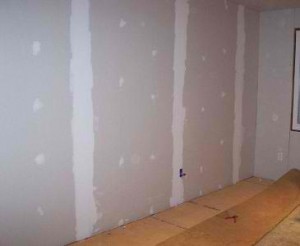
In 1916, the US Gypsum Company (USG) invented drywall. Initially, it was called Sackett Board— after their subsidiary company Sackett Plaster. It was first sold in the form of small, fireproof tiles. In less than a decade, it was already produced as a layer of compressed gypsum sandwiched between two sheets of heavy paper. Even though it only took a short span of time for this board to develop into the material we know today, it took 25 years for builders to begin using it in any considerable quantity.
Drywall was first thought of as a cheap fix, with none of the aesthetic features related to making plaster. US Gypsum eventually changed the brand name of the material to Sheetrock in an effort to improve drywall’s reputation. However, contractors and homeowners still ignored it.
It was not until World War II that contractors started using drywall extensively. At that time, US labor force was fixated on the war manufacturing. Millions of soldiers were sent overseas to fight. Hence, quick and low-cost building materials were needed to balance the labor shortage and war costs. With the use of drywalls, houses and factories can be built immediately and with little labor force. In addition, inexpensive and efficient products, like the drywall, were seen as patriotic. They enabled citizens to spend more time and money in supporting the war.
In 1945, drywall had become the leading building material in the country. Deadlines for construction and repair of homes and commercial spaces were consistently met because of drywalls. As a result, the use of plaster slowly diminished.
At Universal Services, we specialize in drywall and acoustical ceiling construction services. We handle installations, repairs, and maintenance for both commercial and residential spaces. We guarantee utmost satisfaction through the professionalism and craftsmanship we bring in every project.